
Not sure if what you saw was abuse?
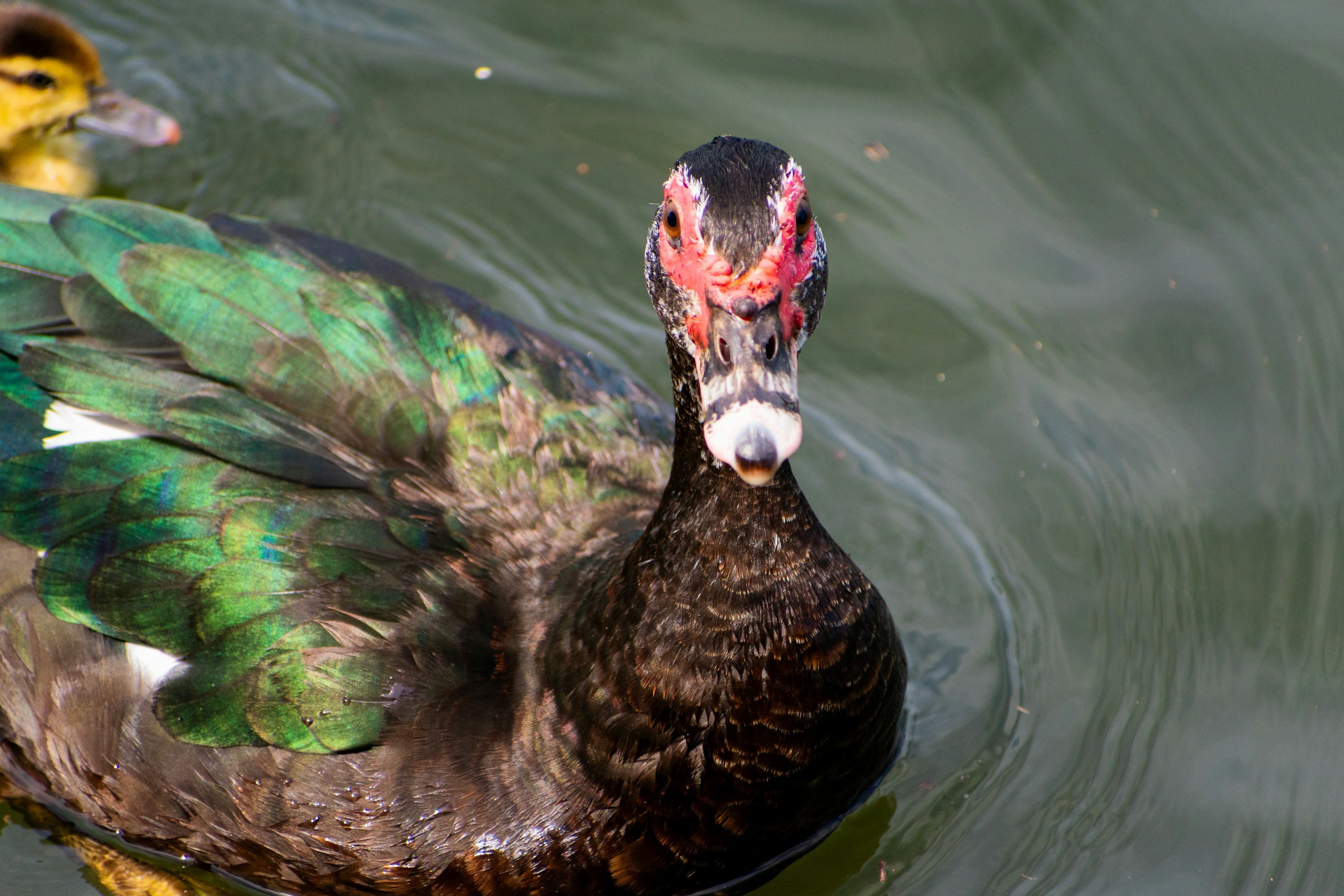
Muscovy ducks are covered by Florida's animal cruelty law.
This page explains what the law actually says, with the statutes cited so you can check it yourself.
One of our main directives as an organization is to end the abuse of muscovy ducks.
If a duck was hurt on purpose or left to suffer, it's likely a crime, even if, to them, it's "just" a Muscovy.
Florida's cruelty statute protects "every living creature".
Being a non-native species changes how a duck can be legally removed, but it does not make cruelty legal.
THE STATUTE
Florida Statute § 828.12 — Cruelty to Animals
This is the core law. It has two tiers, depending on how severe and how intentional the harm was.
TIER 1 · MISDEMEANOR
Animal Cruelty
Covers unnecessary harm that doesn't rise to the felony level, including neglect, not just direct violence.
Unnecessarily tormenting, mutilating, or overworking an animal
Depriving an animal of necessary food, water, or shelter
Transporting an animal in a cruel or inhumane manner
Fla. Stat. § 828.12(1) · 1st-degree misdemeanor, up to 1 year in jail, up to $5,000 fineTIER 2 · FELONY
Aggravated Animal Cruelty
Applies when the act was intentional and caused death, or repeated/excessive suffering.
An intentional act that results in an animal's cruel death
Excessive or repeated infliction of unnecessary pain
An owner/custodian who deliberately fails to act, causing the same
Fla. Stat. § 828.12(2) · 3rd-degree felony, up to 5 years, up to $10,000 fine§ 828.02 — Definitions
"...the word 'animal' shall be held to include every living dumb creature; the words 'torture,' 'torment,' and 'cruelty' shall be held to include every act, omission, or neglect whereby unnecessary or unjustifiable pain or suffering is caused..."
THE QUESTION WE GET MOST
"But Muscovy ducks are non-native — doesn't that mean it's legal to hurt them?"
This is the single biggest misunderstanding we run into, including from people who should know better.
Here's the actual distinction FWC itself draws:
Non-native status changes how a duck can be removed.
Florida Fish and Wildlife (FWC) classifies Muscovy ducks as non-native and doesn't manage them as protected wildlife. Because of that, a landowner (or a licensed nuisance wildlife trapper with the landowner's permission) can trap and humanely remove them without a state permit.
It does not change whether cruelty to them is legal.
Even FWC's own guidance and Florida wildlife-law writers are consistent on this: any removal or euthanasia still has to be humane and still has to comply with animal cruelty law. Kicking, beating, running one over on purpose, throwing one, trapping one and leaving it to starve, or killing one in a way designed to cause suffering is § 828.12 cruelty — regardless of whether the duck is native or non-native.
In other words, being non-native is not a license for violence. A person is not allowed to torment, injure, or kill a duck out of frustration, entertainment, or cruelty, and doing so is exactly the same crime as it would be against a dog or a cat.
IN PRACTICE
Where the line actually is
We're not lawyers, and every case is fact-specific but here's the general shape of the line, based on the statute and how it's been described by FWC and Florida legal sources.
Likely illegal
Kicking, hitting, or throwing a duck
Intentionally hitting one with a vehicle
Shooting, poisoning, or using pellet/BB guns on one
Trapping a duck and leaving it without food, water, or shelter
Mutilating, torturing, or killing slowly for entertainment
Destroying a nest or eggs in a way meant to cause suffering to the hen
Generally lawful
A landowner humanely live-trapping ducks on their own property
Humane euthanasia performed by a professional, per AVMA standards
Non-lethal deterrents — noise, habitat changes
Contacting FWC or a trapper about a genuine nuisance situation
If what you witnessed sits on the left side of that list, it's worth reporting even if you're not 100% sure. That's what our team is for.
WHEN THE PERSON INVOLVED IS A MINOR
Kids can still be held accountable
A lot of the cruelty we see reported involves juveniles, and a lot of people assume "they're just a kid" ends the conversation.
Under Florida law, it doesn't.
Age 7 is the statutory floor — a child younger than 7 generally can't be arrested, charged, or adjudicated delinquent in Florida. Fla. Stat. § 985.031
Arrest is mandatory, not optional — officers "shall arrest" anyone found violating § 828.12, without needing a warrant. Fla. Stat. § 828.17
Adults who involve kids face new felony charges of their own — as of Oct. 1, 2026, an adult who causes or encourages a minor to commit aggravated animal cruelty, or commits it in front of one, faces a separate third-degree felony. HB 559 (2026)
Convicted minors must undergo evaluation and treatment — as of Oct. 1, 2026, a juvenile court must order a psychological evaluation and, if recommended, counseling. The parent or guardian pays for it and can be held in contempt for refusing to follow through. HB 559 (2026)
If law enforcement responds to a report involving minors by filing paperwork and walking away, that's worth escalating.
The "shall arrest" language in § 828.17 is not a suggestion.
Ready to report what you saw?
You don't need to be certain it meets every legal element.
Tell us what happened, and if you have photos, video, or a case number from responding officers, include those too.
Sources: Florida Legislature, § 828.12, § 828.02, § 828.17, § 985.031, HB 559 (2026) · FWC Muscovy Duck guidance (myfwc.com)